
Case Study
Upgrade Firmware Flow Re-Design
Upgrade Firmware Flow Re-Design
Case Study
Upgrade Firmware Flow Re-Design
Project Overview
Project Overview
Project Overview
Network devices are regularly exposed to security vulnerabilities and CVEs, making timely firmware upgrades critical for maintaining secure, stable networks.
Network devices are regularly exposed to security vulnerabilities and CVEs, making timely firmware upgrades critical for maintaining secure, stable networks.
Network devices are regularly exposed to security vulnerabilities and CVEs, making timely firmware upgrades critical for maintaining secure, stable networks.
Problem Statement
Problem Statement
The existing firmware upgrade flow was optimised for bulk upgrades, allowing users to select eligible devices or upgrade all at once. As product usage evolved, additional workflows emerged-such as initiating upgrades directly from a device’s health view and upgrading wireless devices by site - where the existing flow introduced unnecessary steps.
The existing firmware upgrade flow was optimised for bulk upgrades, allowing users to select eligible devices or upgrade all at once. As product usage evolved, additional workflows emerged-such as initiating upgrades directly from a device’s health view and upgrading wireless devices by site - where the existing flow introduced unnecessary steps.
The existing firmware upgrade flow was optimised for bulk upgrades, allowing users to select eligible devices or upgrade all at once. As product usage evolved, additional workflows emerged-such as initiating upgrades directly from a device’s health view and upgrading wireless devices by site - where the existing flow introduced unnecessary steps.
Timeline
Timeline
Nov 2024 -Present
Nov 2024 -Present
Nov 2024 -Present
Nov 2024 -Present
Team
Team
1 Senior UX Designer
1 Senior UX Designer
1 Senior UX Designer
My Role
My Role
Led the design of a unified firmware upgrade experience that balances operational flexibility with control.
Defined three upgrade flows to support real operator workflows: bulk upgrades, device-level upgrades, and site-based rollouts.
Reduced friction by streamlining steps while enabling faster, more confident security updates across the platform.
Led the design of a unified firmware upgrade experience that balances operational flexibility with control.
Defined three upgrade flows to support real operator workflows: bulk upgrades, device-level upgrades, and site-based rollouts.
Reduced friction by streamlining steps while enabling faster, more confident security updates across the platform.
Led the design of a unified firmware upgrade experience that balances operational flexibility with control.
Defined three upgrade flows to support real operator workflows: bulk upgrades, device-level upgrades, and site-based rollouts.
Reduced friction by streamlining steps while enabling faster, more confident security updates across the platform.
Outcome
Reduced steps for site-level firmware upgrades, bulk & single device firmware upgrade.
Aligned global, bulk, and single-device upgrade experiences.


Outcome
Reduced steps for site-level firmware upgrades, bulk & single device firmware upgrade
Aligned global, bulk, and single-device upgrade experiences.
Outcome
Reduced steps for site-level firmware upgrades, bulk & single device firmware upgrade
Aligned global, bulk, and single-device upgrade experiences.
Outcome
Reduced steps for site-level firmware upgrades, bulk & single device firmware upgrade
Aligned global, bulk, and single-device upgrade experiences.
Process
Process
Process
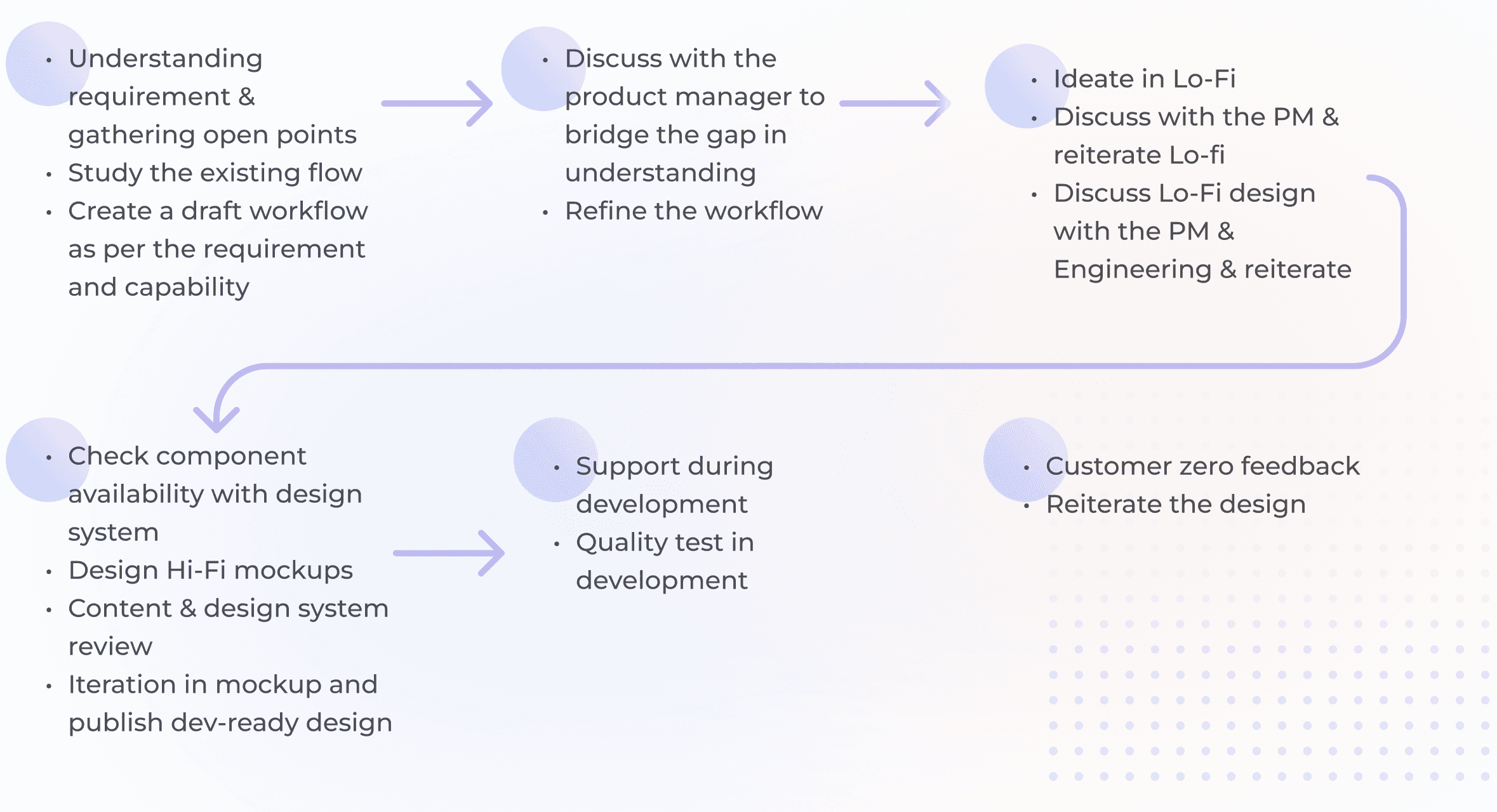
Exploration & Discovery
Exploration & Discovery
Exploration & Discovery
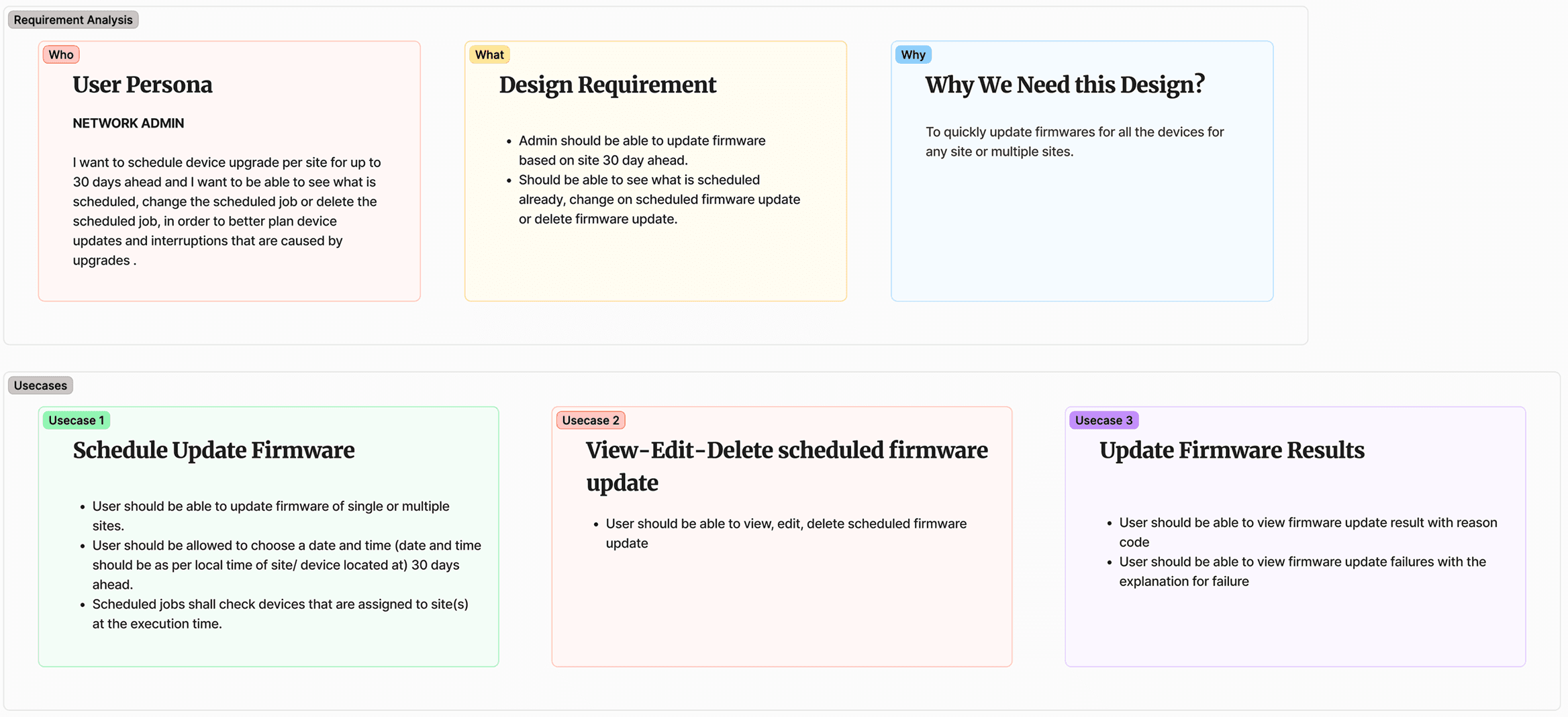
Requirement Analysis and Usecase Mapping
Requirement Analysis and Usecase Mapping
Requirement Analysis and Usecase Mapping
Developed Flow
Developed Flow
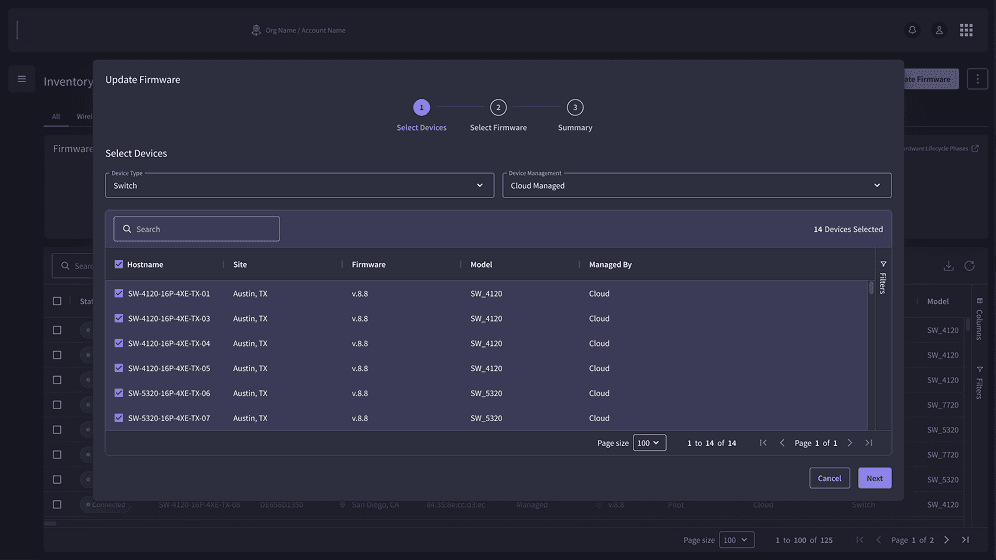
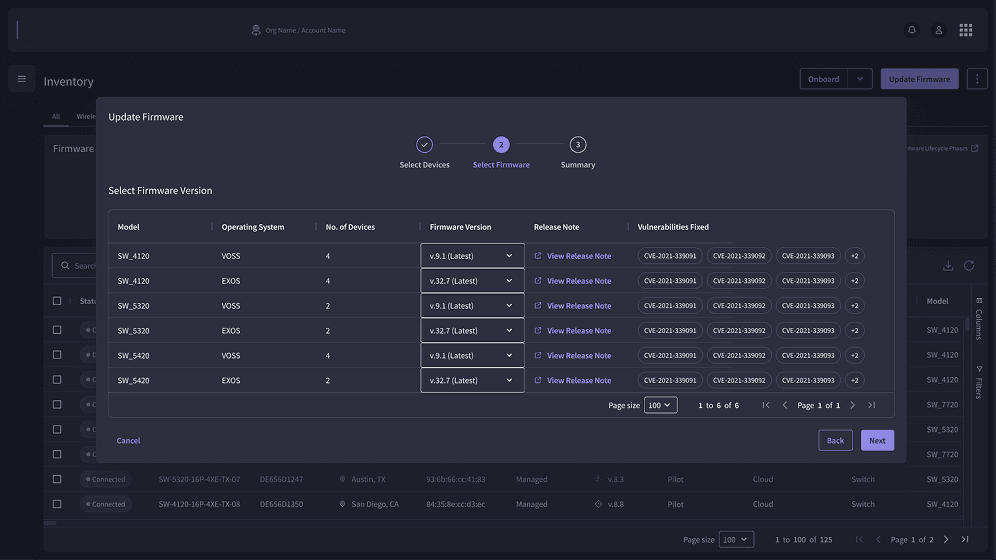
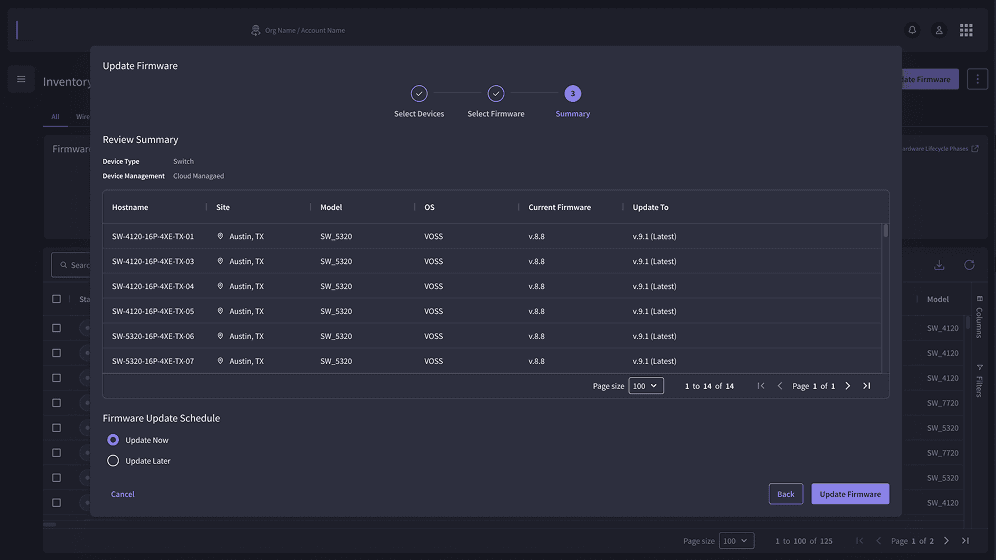

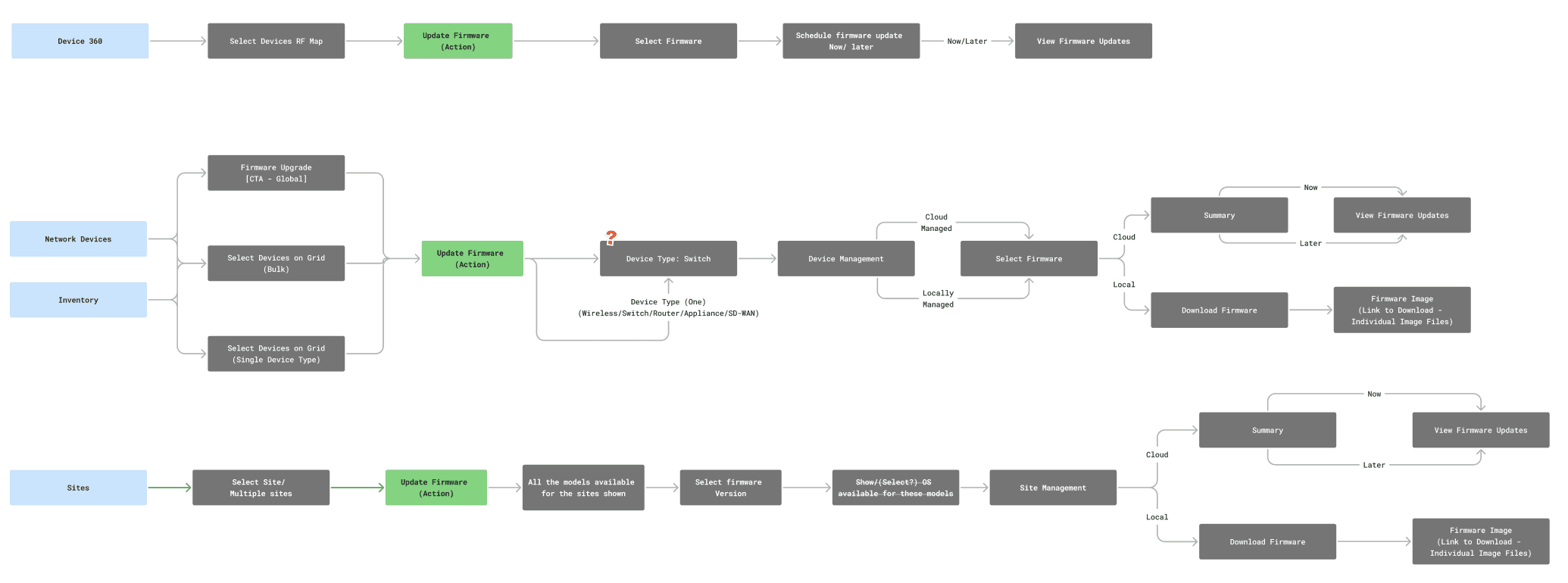
As customer behaviour became clearer through discussions with product managers, I iteratively refined the workflow while creating supporting mockups. This parallel approach helped clarify my own thinking and made the proposed flows easier for three product managers to evaluate, enabling faster alignment and reducing downstream rework.
As customer behaviour became clearer through discussions with product managers, I iteratively refined the workflow while creating supporting mockups. This parallel approach helped clarify my own thinking and made the proposed flows easier for three product managers to evaluate, enabling faster alignment and reducing downstream rework.
API could not reliably detect device type for all serial numbers
Adding different types of device serial numbers together led to an error, and there was no scope to understand which serial number to remove.
Not much can be changed in the backend validation logic due to time constraints.
As customer behaviour became clearer through discussions with product managers, I iteratively refined the workflow while creating supporting mockups. This parallel approach helped clarify my own thinking and made the proposed flows easier for three product managers to evaluate, enabling faster alignment and reducing downstream rework.

Ideation
Ideation
Ideation
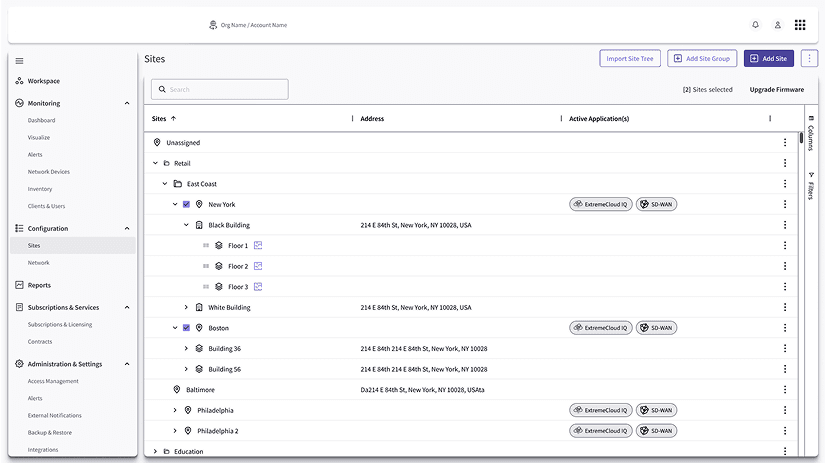
Initially with the site level firmware upgrade requirement our approach was to keep the entry point for site level upgrade in the ‘Sites’ page
Initially with the site level firmware upgrade requirement our approach was to keep the entry point for site level upgrade in the ‘Sites’ page
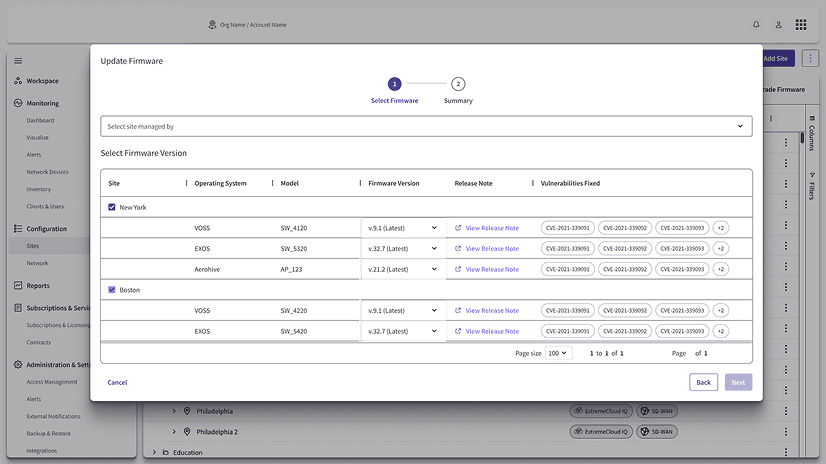
Sites can run multiple OS. To maintain consistency with existing flow, firmware details like Release Notes and Vulnerabilities Fixed are shown at the site level.
Sites can run multiple OS. To maintain consistency with existing flow, firmware details like Release Notes and Vulnerabilities Fixed are shown at the site level.
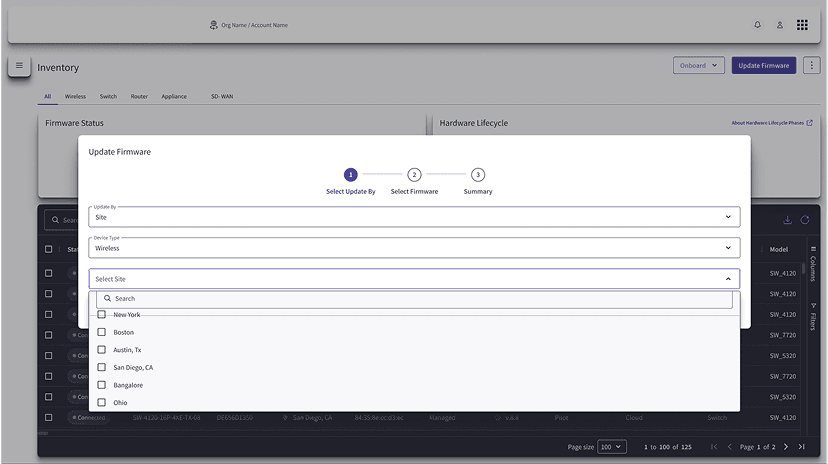
To ensure consistent behaviour across entry points, the firmware upgrade action was removed from site, with upgrade scope selection in the first step based on API constraints.
To ensure consistent behaviour across entry points, the firmware upgrade action was removed from site, with upgrade scope selection in the first step based on API constraints.
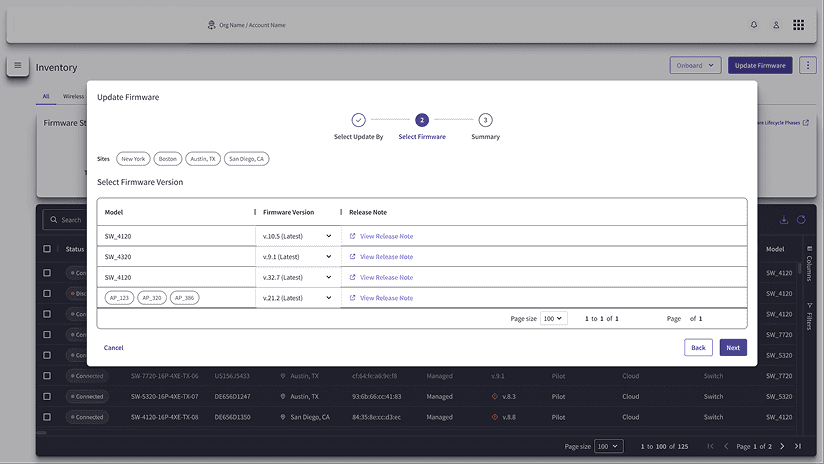
In step two, device models are aggregated based on the selected site, allowing firmware selection consistent with the existing device-level firmware upgrade.
In step two, device models are aggregated based on the selected site, allowing firmware selection consistent with the existing device-level firmware upgrade.
After multiple rounds of ideation and alignment with two product managers, we defined a transparent and scalable firmware upgrade solution.
Entry Points
• Device 360 for device-specific actions
• Network Devices for monitoring-driven workflows
• Inventory for asset-level management
Scope
• Single-device upgrade
• Bulk device upgrade
Upgrade Method
• By Device
• By Site
After multiple rounds of ideation and alignment with two product managers, we defined a transparent and scalable firmware upgrade solution.
Entry Points
• Device 360 for device-specific actions
• Network Devices for monitoring-driven workflows
• Inventory for asset-level management
Scope
• Single-device upgrade
• Bulk device upgrade
Upgrade Method
• By Device
• By Site
After multiple rounds of ideation and alignment with two product managers, we defined a transparent and scalable firmware upgrade solution.
Entry Points
• Device 360 for device-specific actions
• Network Devices for monitoring-driven workflows
• Inventory for asset-level management
Scope
• Single-device upgrade
• Bulk device upgrade
Upgrade Method
• By Device
• By Site
Constraints
Constraints
Constraints
Constraints
Due to technical constraints, mixed device types and differently managed devices cannot be upgraded together.
Since some parts of the design have already been developed, the new design should follow a consistent approach with the previous design.
Due to technical constraints, mixed device types and differently managed devices cannot be upgraded together.
Since some parts of the design have already been developed, the new design should follow a consistent approach with the previous design.
Due to technical constraints, mixed device types and differently managed devices cannot be upgraded together.
Since some parts of the design have already been developed, the new design should follow a consistent approach with the previous design.
Hi-Fidelity Design
Hi-Fidelity Design
Hi-Fidelity Design
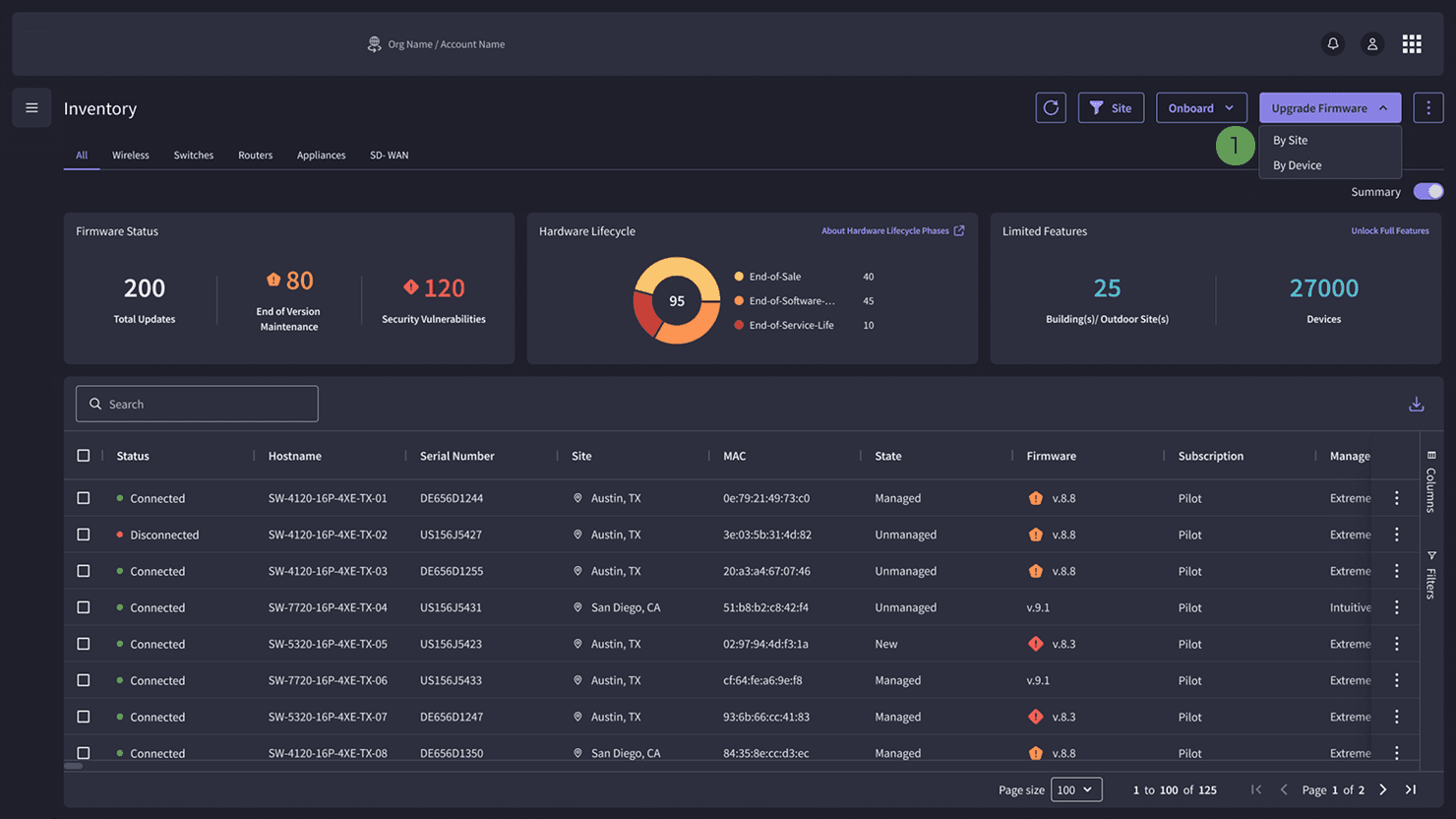
Renamed ‘Update Firmware’ to ‘Upgrade Firmware’ for product-wide consistency.
Changed the global ‘Upgrade Firmware’ action with two scopes: by Site and by Device.
Renamed ‘Update Firmware’ to ‘Upgrade Firmware’ for product-wide consistency.
Changed the global ‘Upgrade Firmware’ action with two scopes: by Site and by Device.
By default, all sites from Inventory or network devices are preselected, with the option to adjust the selection. Eligible device models are aggregated for upgrade in the same view. Due to API constraints, site-level upgrades support only wireless devices.
By default, all sites from Inventory or network devices are preselected, with the option to adjust the selection. Eligible device models are aggregated for upgrade in the same view. Due to API constraints, site-level upgrades support only wireless devices.
Device-level upgrade is reduced to two steps by removing an unnecessary click. Due to technical constraints, different devices and devices managed differently cannot be upgraded together. Devices on this page are auto-selected by default.
Device-level upgrade is reduced to two steps by removing an unnecessary click. Due to technical constraints, different devices and devices managed differently cannot be upgraded together. Devices on this page are auto-selected by default.
If devices are selected on the grid, firmware upgrades are completed in a single step, minimizing effort while meeting technical feasibility.
If devices are selected on the grid, firmware upgrades are completed in a single step, minimizing effort while meeting technical feasibility.
Usability Testing
Usability Testing
Usability Testing
Demographics
Demographics
As part of usability testing, we tested the Inventory page along with firmware upgrade flows using dscout with six research participants who were working as network admins or IT operations managers and were familiar with different networking applications such as Cisco DNA Centre, Solar Winds, etc.
As part of usability testing, we tested the Inventory page along with firmware upgrade flows using dscout with six research participants who were working as network admins or IT operations managers and were familiar with different networking applications such as Cisco DNA Centre, Solar Winds, etc.
API could not reliably detect device type for all serial numbers
Adding different types of device serial numbers together led to an error, and there was no scope to understand which serial number to remove.
Not much can be changed in the backend validation logic due to time constraints.
As part of usability testing, we tested the Inventory page along with firmware upgrade flows using dscout with six research participants who were working as network admins or IT operations managers and were familiar with different networking applications such as Cisco DNA Centre, Solar Winds, etc.
Although the bulk upgrade firmware flow was optimized and design system patterns were used, 33% of research participants struggled to find the 'Upgrade Firmware' tertiary button in the grid-level bulk action and instead looked for the primary button on the page.
To solve this with minimal development effort, we activated 'Upgrade Firmware' primary button on the page for bulk actions alongside the existing grid-level action.
Trade-Off
Trade-Off
Although the device selection step could not be removed, all eligible devices are preselected by default to reduce effort and minimize cognitive load.
Although the device selection step could not be removed, all eligible devices are preselected by default to reduce effort and minimize cognitive load.
API could not reliably detect device type for all serial numbers
Adding different types of device serial numbers together led to an error, and there was no scope to understand which serial number to remove.
Not much can be changed in the backend validation logic due to time constraints.
Although the device selection step could not be removed, all eligible devices are preselected by default to reduce effort and minimize cognitive load.
Learnings
Learnings
Designing around technical constraints without degrading user experience.
The research revealed that design systems and established patterns do not always align with user expectations. Also, dynamic prototypes, including live or AI-coded versions, could have been more effective than static Figma prototypes.
Designing around technical constraints without degrading user experience.
The research revealed that design systems and established patterns do not always align with user expectations. Also, dynamic prototypes, including live or AI-coded versions, could have been more effective than static Figma prototypes.
Learnings
The Inventory page research revealed that design systems and established patterns do not always align with user expectations, making usability testing essential for uncovering real user challenges.
Dynamic prototypes, including live or AI-coded versions, could have captured better responses than static Figma prototypes.
Success Metrics
Success Metrics
Goals
Goals
Goals
Measures
Measures
Global Device-based upgrade firmware
Global Device-based upgrade firmware
Global Device-based upgrade firmware
Efficiency improved by 33%
Efficiency improved by 33%
Efficiency improved by 33%
Steps reduction in the flow
Steps reduction in the flow
Global Site-based upgrade firmware
Global Site-based upgrade firmware
Global Site-based upgrade firmware
Efficiency improved by 67%
Efficiency improved by 67%
Efficiency improved by 67%
One step firmware upgrade flow.
Reduction of clicks in filter selection
Increased discoverability
One step firmware upgrade flow.
Reduction of clicks in filter selection
Increased discoverability
Bulk and Single device upgrade firmware
Bulk and Single device upgrade firmware
Bulk and Single device upgrade firmware
Efficiency improved by 60%
Efficiency improved by 60%
Efficiency improved by 60%
Reduction of steps.
Redundant clicks.
Reduction of steps.
Redundant clicks.